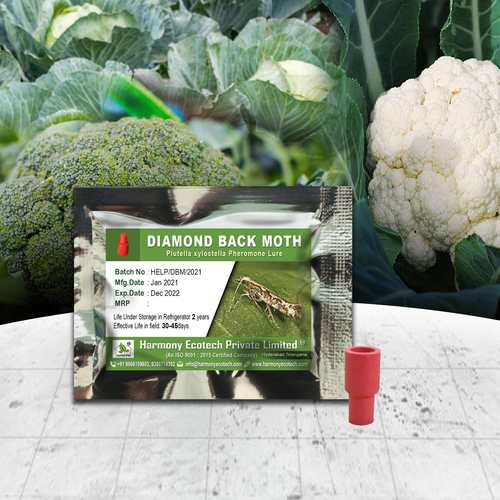
Plutella Xylostella - Diamond Back Moth About
Plutellaxylostella - Diamond Back Moth is apt for the protection of crucifer crops. It can prevent the damage and enables plant foliage. It has good resistance and is suited for several adverse conditions. Plutellaxylostella - Diamond Back Moth is functional as a biological control agent. It has high utility and offers significant level of control. It can be used on many field borders and can retain the pests such as crucifer pests and DBM.
Specification
|
Insect Type
|
Moths
|
|
Material
|
Rubber Septa
|
|
Pest Control Type
|
Pheromone
|
|
Brand
|
ACTIVE IPM
|
|
Usage/Application
|
Agriculture
|
|
Color
|
Red
|
|
Packaging Type
|
Pouch
|
|
Country of Origin
|
Made in India
|
Targeted Pest ManagementThis biological agent specifically targets the Diamond Back Moth (Plutella xylostella), a major pest affecting cruciferous crops such as cabbage, cauliflower, and broccoli. By parasitizing the larvae and pupae, it helps significantly reduce crop damage while maintaining ecological balance.
How to UseFor effective results, release the live parasitoids during the early larval stage of the pest. Follow the dosage advised by your field expert or supplier, and distribute the containers or vials throughout the crop field as per the recommended coverage area.
Eco-Friendly and SafeThis biological pest control method is odourless, non-toxic, and safe for both the environment and beneficial insects. It eliminates the need for chemical pesticides, making it ideal for sustainable and integrated pest management strategies.
FAQs of Plutella Xylostella - Diamond Back Moth:
Q: How is Plutella Xylostella - Diamond Back Moth Biological Control applied to crops?
A: The product should be released directly onto the crop field, targeting areas infested with Diamond Back Moth larvae and pupae. Releases are best conducted in the early larval stage, following the dosage guidance given by field experts or the product supplier.
Q: What crops are best suited for this biological control method?
A: This biological agent is designed mainly for cabbage, cauliflower, broccoli, and other cruciferous vegetablescrops that are commonly attacked by the Diamond Back Moth.
Q: When should I release the parasitoids for maximum effect?
A: For optimal results, introduce the parasitoids during the early larval stage of the Diamond Back Moth infestation, as early intervention ensures higher pest mortality and better crop protection.
Q: Where should the product be stored before use?
A: Prior to release, keep the containers or vials in a cool, well-ventilated area and avoid exposure to direct sunlight to maintain organism viability.
Q: Is re-application necessary, and how often should I repeat releases?
A: Depending on pest monitoring results and infestation levels, repeated releases may be required. The exact re-application interval should be determined by a field expert based on local pest pressure.
Q: What are the main benefits of using this biological control over chemical pesticides?
A: This method is target-specific, non-toxic, odourless, and safe for beneficial insects. It contributes to environmentally-friendly farming by minimizing chemical use and supporting natural pest regulation.





 08045477267


 Send Inquiry


 Send Inquiry


 English
 Spanish
 French
 German
 Italian
 Chinese (Simplified)
 Japanese
 Korean
 Arabic
 Portuguese